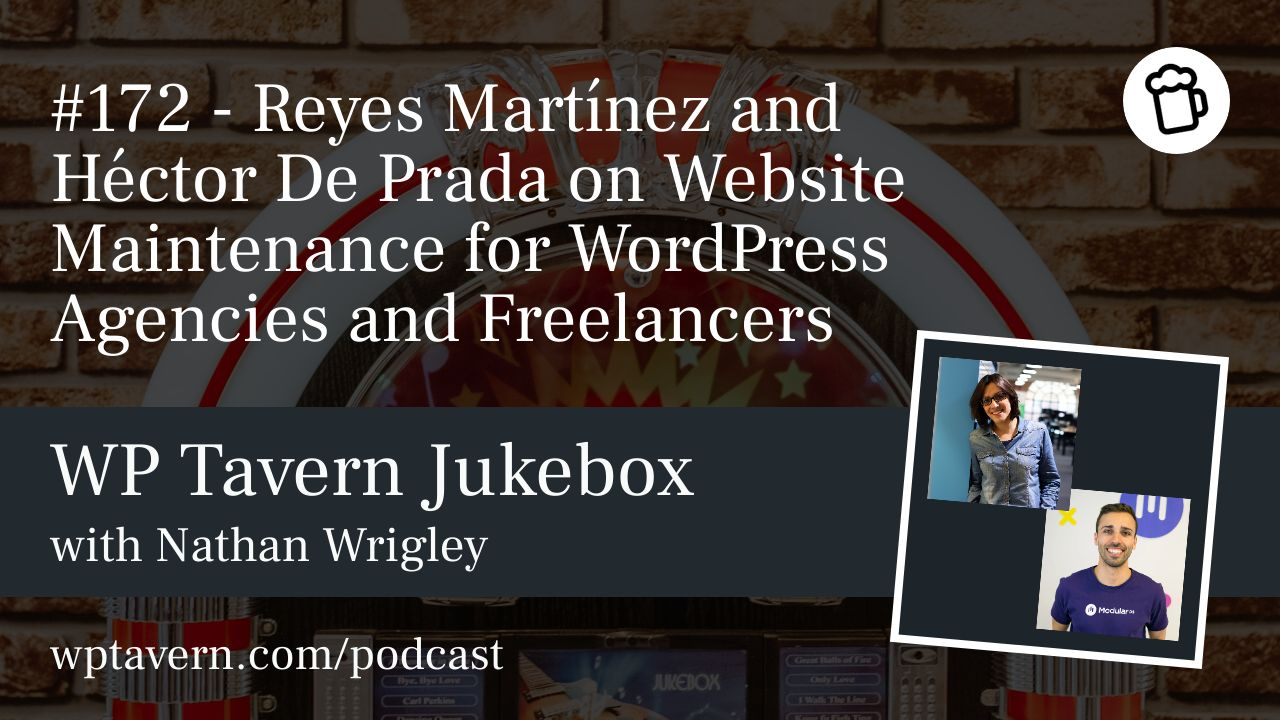

This post summarizes a conversation with Reyes Martínez and Héctor de Prada from Modular DS about running maintenance services for WordPress sites, why it matters, and how to sell and scale it.
Who the guests are
Reyes Martínez has been involved with WordPress since 2015, with a background in journalism, digital communications, and product marketing. She was on WordPress marketing sponsored by Automattic from 2021–2024 and is now content lead at Modular DS. Héctor de Prada has built websites since his teens, worked with WordPress for nearly a decade, moved from freelancing into agency work, co-founded Modular DS, and runs a local WordPress meetup in León, Spain.
Why maintenance matters
Moving from building a single site to managing multiple client sites quickly changes maintenance from a small task into a major business responsibility. Maintenance keeps sites secure, performant, and functional. Plugins and themes developed by many different authors can contain vulnerabilities or bugs, so regular attention prevents breaches, downtime, and data loss.
Core maintenance tasks
– Keep WordPress core, themes, and plugins updated to reduce security and compatibility risk.
– Maintain regular, automated backups and test restores.
– Monitor uptime and performance so issues are detected before clients notice.
– Run vulnerability scans and harden security settings.
– Clean up and optimize databases.
– Test critical user journeys such as contact forms and checkout flows.
Automation helps make these tasks reliable even when a maintainer is unavailable.
Explaining maintenance to clients
Education is essential. Most clients are nontechnical and don’t instinctively value invisible work. Use analogies like maintaining a car or a house rather than buying a one-off product. Position maintenance as protection and insurance for long-term success. Explain concrete outcomes: reduced downtime, faster page loads, fewer security issues, and quicker recovery when things go wrong.
Selling maintenance and building recurring revenue
Maintenance plans are typically sold as monthly or annual subscriptions and create predictable income compared with one-off projects. Best practice is to include maintenance in the initial project proposal rather than adding it later. This makes the handoff smoother and normalizes ongoing care.
Pricing and demonstrating value
Clients often balk at ongoing fees if they see no visible activity. Reporting is the solution. Provide monthly reports that list updates applied, backups taken, monitoring alerts, performance metrics, and security findings. Tie technical work to business outcomes by including analytics, search console insights, traffic sources, and any improvements in uptime or speed. Offering a small allotment of monthly support time for content tweaks or minor changes also makes plans feel tangible.
Specialization and scale
Maintenance needs vary by site type. A simple brochure site has different demands than a high-traffic WooCommerce store, which requires more frequent backups, faster response SLAs, and more intensive monitoring. Many specialists and agencies operate maintenance-only businesses and can manage large portfolios using automation tools, with some freelancers maintaining hundreds of sites.
Regulatory and market changes
Legal and regulatory shifts such as evolving data privacy rules, upcoming EU accessibility requirements, and legislation like the Cyber Resilience Act create new obligations and upsell opportunities. Meanwhile, no-code and AI tools make site launches easier, increasing the number of sites but also the number left unmaintained, expanding demand for professional maintenance.
How Modular DS helps
Modular DS offers a mixed SaaS and connector plugin platform to centralize maintenance: bulk updates, vulnerability scanning, monitoring, backup management, and automated reporting. The connector plugin ties client sites to the platform so agencies can manage tasks from a single console. White-label options let agencies brand client reports and plugin interfaces so clients see agency branding rather than Modular DS.
Business advice
Maintenance can be a stand-alone business or a profit center within an agency. Include maintenance early in client conversations, use automation to scale, and provide regular, business-focused reporting to justify fees. Position maintenance as an investment in continuity and growth rather than a recurring cost.
Summary
A solid maintenance offering covers updates, backups, uptime and performance monitoring, security checks, testing of core user journeys, and client reporting. With the right automation and positioning, maintenance provides predictable recurring revenue and can scale to serve many clients while protecting sites against security, performance, and regulatory risks.