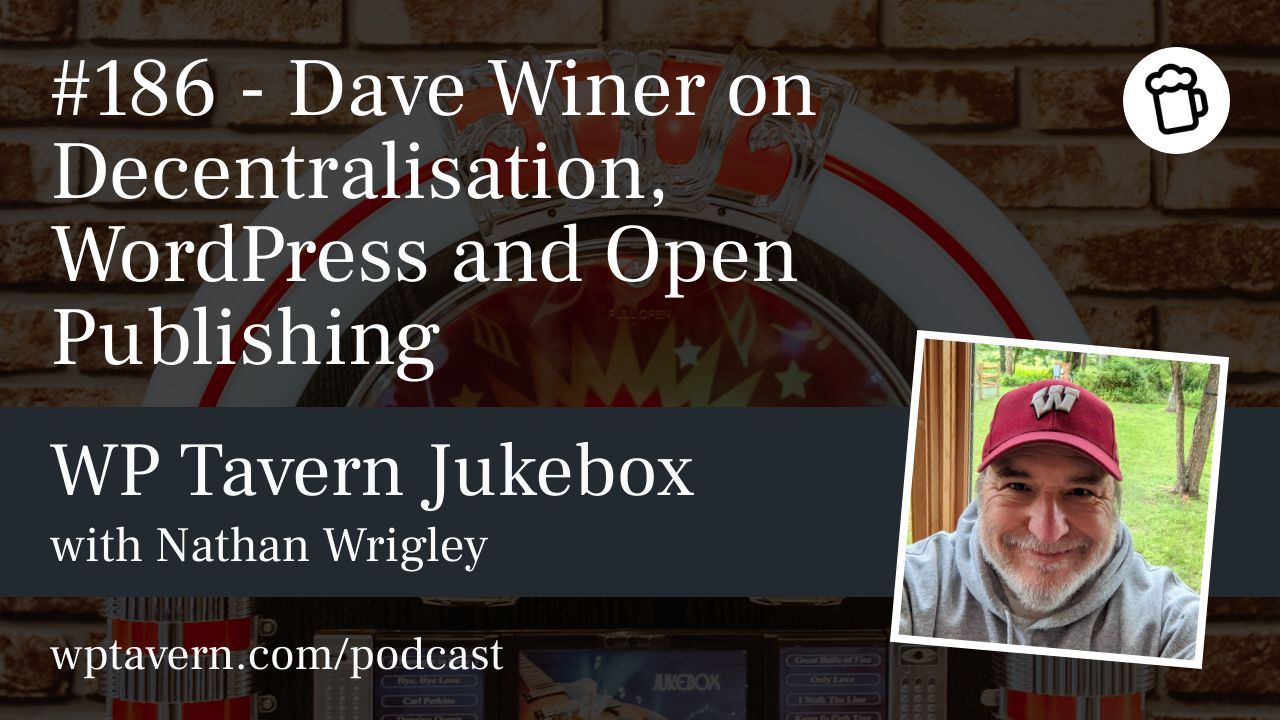

Dave Winer, a long‑time builder and advocate for an open, interoperable web, joined the Jukebox Podcast to lay out how we got here and what a more open future of publishing might look like. Winer’s work on early web standards—RSS and podcasting among them—still shapes how people subscribe to and consume content. He traces his path from graduate school in Wisconsin to Silicon Valley, building products, meeting people like Steve Jobs, selling a company, and returning to the thing that motivates him most: software that enables genuine human communication.
Winer characterizes his goal as “communication with a big C.” He remembers the web’s early days as collaborative and feature‑rich, where third‑party extensions, stable links and author control were normal. The rise of venture capital and platform companies changed incentives. Facebook, Twitter (X), Google and others provided convenience and powerful network effects, but often at the cost of interoperability, user control and the editorial features writers need. Platforms optimized for attention and retention, sometimes by removing basic tools—long posts, editing, full linking—or by locking content and communities behind proprietary systems.
A recurring theme in Winer’s critique is the loss of the web’s composability: the ability for independent developers to add features without permission, and for authors to move their work and audiences freely. He points out that part of the centralization came from convenience: a single‑click follow on social apps beat early, clunky steps to subscribe with RSS, and that simple UX shifted attention into closed networks.
But he’s not nostalgic in a passive way; he’s building. Winer describes three related projects and a set of concrete requirements meant to bring back openness with modern usability: Textcasting, Wordland and Feedland.
Textcasting (textcasting.org) is a manifesto and a spec for what interoperable, writer‑focused text services should support. The short feature set Winer insists on includes optional titles, hyperlinks, basic styling (bold, italics), enclosures for audio/files (so podcasting works), unlimited length, editable posts, and a canonical markdown payload. He calls markdown the “mp3 of text”: simple, keyboard‑friendly, and easy to carry in feeds. Because RSS predates markdown, it wasn’t originally the native payload—Winer’s work makes RSS carry markdown so feeds can be authored and consumed in that format. He argues networks should accept inbound as well as serve outbound RSS so authors can publish from their own sites and readers can pick where they consume.
Wordland (wordland.social) is a deliberately minimal authoring experience that integrates with WordPress. It strips away much of WordPress’s admin complexity so writers can draft without distraction. Wordland stores content as markdown, supports categories and bookmarks, emits RSS feeds containing markdown, and is built to resist breakage. Its server components are open source (MIT), so anyone can run them; Winer will host an initial server to bootstrap use but stresses there’s no intent to lock people in.
Feedland is a feed backend Winer uses to provide scalable, near‑realtime feed capabilities. He’s been running parts of this on Automattic VIP infrastructure while learning server‑side scaling. In his view, interoperability needs stable APIs and a mature codebase—areas where WordPress is a strong foundation thanks to its commitment to backwards compatibility. Winer reframes WordPress as a text database and publish/subscribe endpoint—akin to Mastodon or Bluesky in function—on which timelines and readers can be built.
On federated systems like ActivityPub and Mastodon, Winer applauds WordPress plugins that bridge into the Fediverse and sees this work as compatible with Textcasting goals. He calls Automattic’s ActivityPub integrations important steps toward mainstreaming interoperable publishing. Still, he emphasizes that RSS is simple, open and sufficient as a core building block: any reader or timeline can ingest feeds, and RSS’s lack of gatekeeping is an asset.
Winer is pragmatic about adoption: developers follow users, so early traction matters. He invites both users to try Wordland and its feeds, and developers to build on the open code. He expects an ecosystem to emerge through experimentation—multiple timelines, readers and servers competing on features, speed and cost—and hopes that competition will push commercial networks to support basics like markdown, editing and no arbitrary length limits.
Comments and moderation are not central to the Textcasting spec; Winer believes discussion can live elsewhere and is exploring ideas to address abuse and spam. His immediate priority is a clean, writer‑first publishing experience with guaranteed portability and interoperability.
Everything he’s building is intentionally open: code is on GitHub under permissive licenses, designed to prevent vendor lock‑in. Winer plans public demos of Wordland and Feedland, invites the WordPress community to test and contribute, and frames this as a practical movement rather than an appeal to altruism. Platforms that intentionally enable competitors and user freedom, he argues, deserve trust. His goal isn’t to stop people using Facebook or X—those services provide value—but to offer a viable alternative where writers control their content, can move freely, and publish with the expressive tools they need.
In short: the web once offered open interoperability and author freedom; centralized platforms filled a usability gap and consolidated attention. Winer believes we can combine the convenience that made those platforms popular with the openness of the web—using RSS, markdown, WordPress and interoperable tools—and he’s building prototypes to prove it. He calls on writers, developers and communities to experiment, adopt, and help reclaim a more open publishing ecosystem.