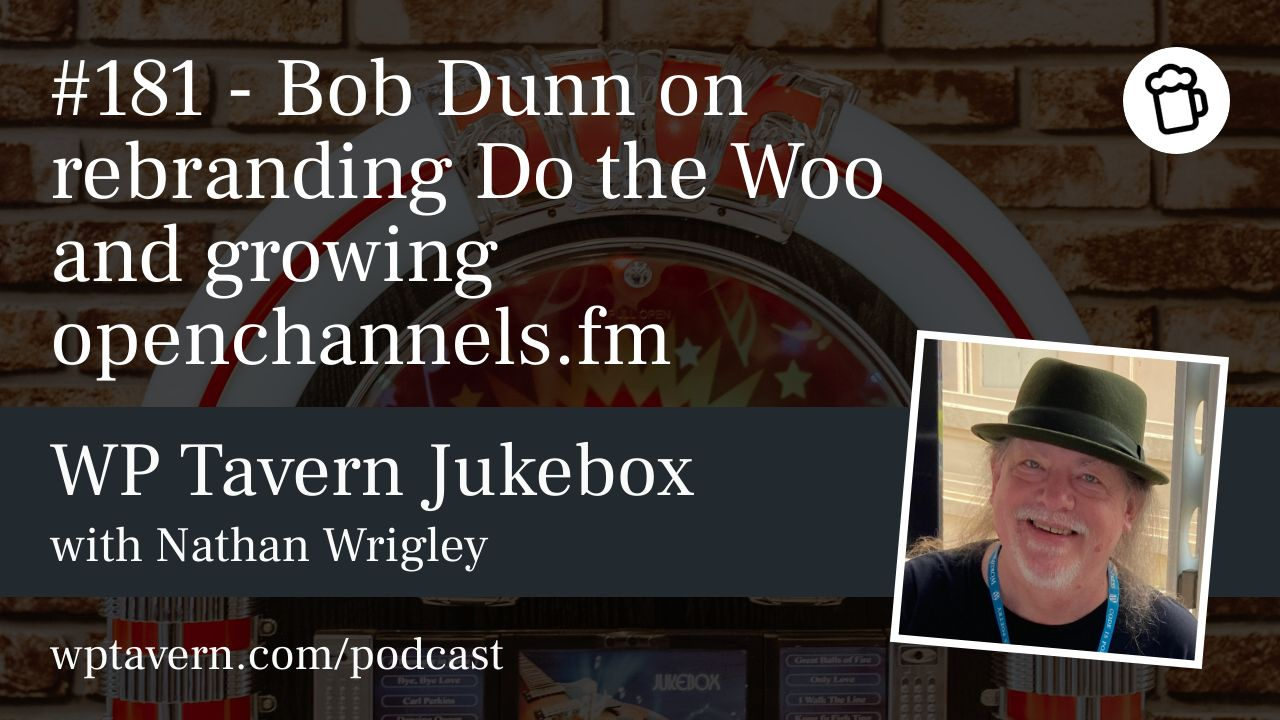

Bob Dunn, known as BobWP, has been podcasting for nearly two decades. After nearly seven years running Do the Woo — a show that started focused on WooCommerce and gradually widened into broader WordPress and maker topics — he rebranded the project as Open Channels FM to better reflect the range of conversations he wanted to host and to build a more flexible, sustainable network.
Why rebrand
The Do the Woo name and niche focus worked well for a time, but it also limited who felt invited to listen or contribute. As episodes drifted into the open web, open source, the fediverse, and general maker conversations, Bob opted for a brand that wouldn’t signal exclusivity to WordPress or WooCommerce audiences. The rebrand preserves past content and listeners while opening the doors to a wider community.
Network structure: channels and series
Open Channels FM moves away from rigid, single-show thinking and is organized into three umbrella channels with multiple series under each:
– Open Makers: for people building things in tech — developers, designers, plugin and theme creators, and series about WordPress and WooCommerce.
– Open Source Reach: wider open-source topics and guests from projects beyond WordPress.
– Open Web Conversations: discussions about the open web, fediverse, privacy, and related topics.
This channels-and-series approach makes the network more flexible. Series can be short experiments or long-running programs; hosts can move between series and channels; and a series can end without closing an entire channel. The model helps keep content organized, discoverable, and evergreen.
Subscriptions and RSS feeds
Listeners can follow a single “firehose” feed at openchannels.fm to receive every episode, or subscribe to channel-specific RSS feeds to get only the content they want. Bob uses a WordPress-based site with Castos to manage multiple feeds under one roof while offering channel-level subscriptions.
Delegating hosting and production
A key change is that Bob is no longer the constant host. About 25–30 hosts now produce episodes across the network. Many were already part of Bob’s community, so there was existing rapport and trust. Hosts handle guest booking and episode recording, while production and post-production are coordinated centrally.
Bob says he enjoys hearing new voices and watching hosts build their own brands and relationships, but he also notes production is a heavy lift. Editing, quality control, and publishing add up, and he is exploring ways to step back from day-to-day production while remaining founder and public face.
Rebranding logistics and hiccups
Practical tasks took careful planning. Redirects and the order of feed changes had to be managed to avoid breaking subscriptions. There have been some hiccups with Apple Podcasts that Bob worked with support to resolve. He also updated roughly 670 episode feature images to reflect the new brand so the archive wouldn’t confuse listeners — a time-consuming but necessary part of rebranding.
Funding and sustainability
Open Channels FM is funded mainly through sponsorships. Bob has tried different monetization models over the years; securing and managing sponsors is ongoing work and central to making the network sustainable long-term.
Open to contributors and future plans
The network welcomes new contributors and series ideas. Because series live under flexible channel umbrellas, new voices can be tested without complicating the site. Current hosts volunteer their time and benefit from exposure and networking opportunities.
Bob plans to stay involved as founder and occasional on-air presence but wants to reduce hands-on production. At 68, he values more time for other pursuits and aims to make the network resilient enough to run without constant intervention. For more information or sponsorship inquiries, visit openchannels.fm, which includes a sponsors page.